LoadingLoading

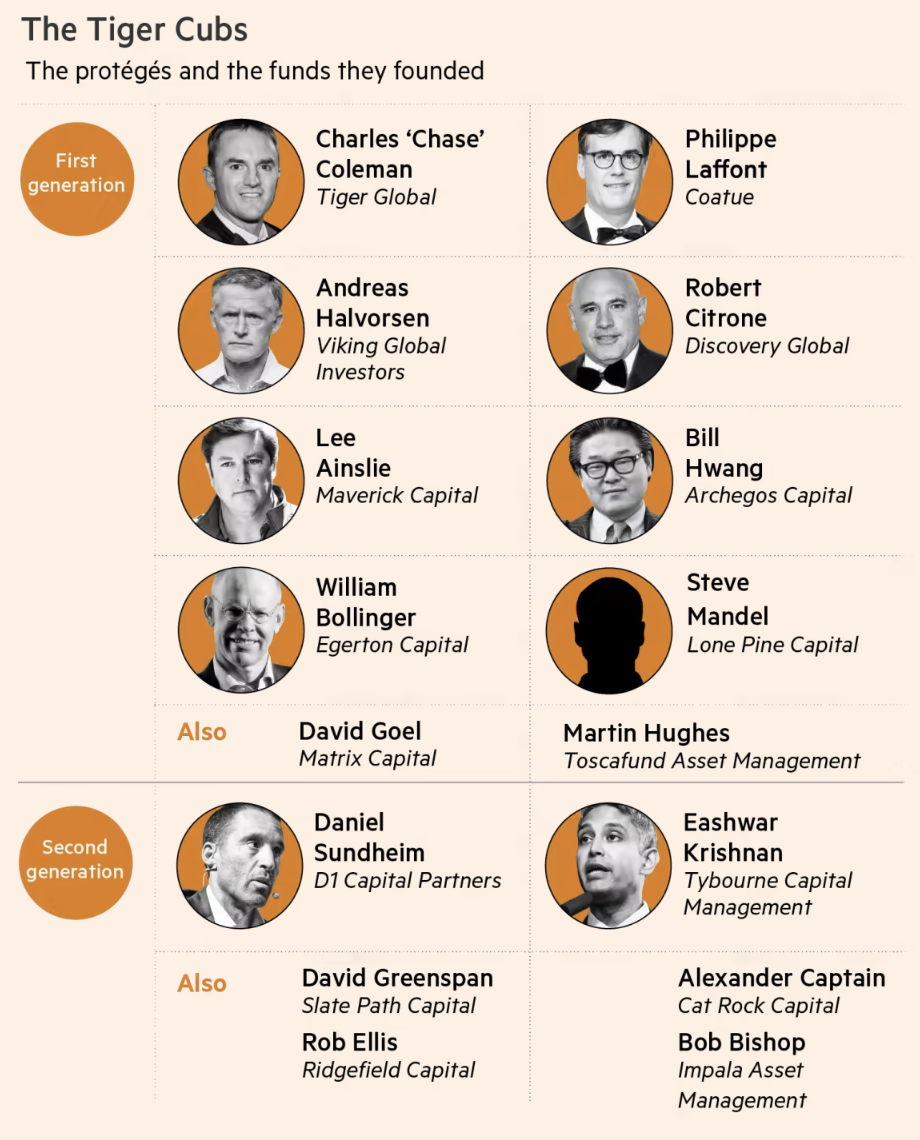
When the collapse of Archegos Capital Management caused more than $10 billion in losses across multiple banks, founder Bill Hwang's background stood out: He was a former member of Tiger Management.
When the collapse of Archegos Capital Management caused more than $10 billion in losses across multiple banks, founder Bill Hwang's background stood out: He was a former member of Tiger Management.
Before the private investment firm's collapse in March, Huang was a relatively unknown figure, better known for his 2012 guilty plea to wire fraud charges. However, peers were shocked that he was able to later secure $50 billion in financing from top banks to amplify the bet that ultimately failed.
But Huang's status as a former Tiger Management manager puts him in the elite ranks of hedge funds. He worked at Tiger Management in New York from 1996 to 2001, becoming a protégé of 1980s hedge fund pioneer Julian Robertson. The Archegos fiasco underscores how, even decades after Robertson shut down Tiger Management's foreign investments, his so-called "tiger cubs" still have enough cachet to open the door to the world's most prestigious banks and investors.
<!-- @@@ -->“Once you have tiger blood, that helps convince anyone to do business with you,” said a prime broker at a bank that lost money in the Archegos collapse.
Huang's case is a special case. Among this group of managers who have made billions of dollars for their clients, some are now the most highly regarded investors in the world.
<!-- @@@ -->“No firm in the history of investment management has produced more exceptional talent,” said Optima Asset Management CEO Dixon Boardman, who worked with Robertson at brokerage Kidder, Peabody & Co before he founded Tiger in 1980.
Tiger's influence extends across global finance. Nearly 200 hedge fund firms can trace their origins to Tiger Management, according to investor LCH Investments. They either had worked at the original Tiger Fund, were one of the 50 or so firms for which Robertson provided start-up capital, or were "Tiger grandsons" who spun off from these alumni firms. Only George Soros' hedge fund Soros Fund Management has come close to producing so many key industry figures, according to LCH.
Even now, Robertson's ties to his disciples remain strong and they often hold similar positions. "Bill is a good friend of mine and I know him well. I think he made a mistake and I expect he will move on from it," Robertson, 88, told the Financial Times in a rare interview.
Asked whether Huang's tiger background helped him secure significant financing from banks, Robertson said: "I don't know. I can't answer that." Huang declined to comment for this article.
Tiger Management's performance was exceptional, beating the U.S. market for 14 consecutive years, thanks to high-profile trades such as betting against falling copper prices in 1996 or betting on the Thai baht to weaken the following year. From 1980 to 2000, it achieved an average annual net return of more than 25%. At the time, Robertson returned money to investors because he refused to participate in the Internet stock boom of the late 1990s, and despite losing 19% in 1999, he was ultimately proven correct.
“Julian Robertson influenced trillions of dollars in assets under management to some degree because there were so many people who worked for him, directly or indirectly,” said Daniel Strachman, author of “Julian Robertson: A Tiger in the Land of Bulls and Bears.”
Some commentators believe the aura surrounding Tiger Cubs has been exaggerated or has dimmed in recent years, and that some of the methods pioneered by Tiger Management in its early days are now commonplace. For example, many of these managers have been bullish on U.S. growth stocks recently - a consensus trade at a time when monetary easing is driving stock market gains.
But few can dispute the success of some of the original Tiger Cubs.
"The success rate for the group as a whole is not that different from the success rate for the hedge fund community, but those who have been successful over the long term have had extraordinary results and have been resilient in changing markets," said Jim Neumann, chief investment officer at Sussex Partners, which advises clients on hedge fund investments.
Many of the "tiger cubs" remained friends with each other and stayed in touch with Robertson, and they developed similar investing styles they learned from him. It's a deceptively simple approach: Use fundamental research to buy the best companies and short the worst.
<!-- @@@ -->Robertson told the Financial Times that a rigorous recruitment process was key: "I think they are talented people and we go in a very calculated and deliberate way to find them. They have been selected really carefully."
Philippe Laffont, founder of Coatue Capital, said Tiger's focus on recruiting "well-rounded people rather than specialists" was the "secret sauce," creating a culture of competitive, curious and extroverted people.
A key figure in this process was Dr. Aaron Stern, a psychoanalyst who served the company in various roles, including chief operating officer, for 30 years. Dr. Stern, who died in April at the age of 96, was a leading expert on narcissistic personality disorder and the author of the influential 1979 book "Me: The Narcissistic American."
“Aaron is a great guy,” Boardman said. "It might be a stretch to say he was responsible for Julian's success... but he was the one who singled out the people who should be there, who should be sitting at the king's table."
Robertson used Dr. Stern in the early 1990s to develop a systematic approach to replicating Tiger's early success in recruiting talented young analysts, which had previously relied on his gut instinct. The test for applicants consists of approximately 450 questions and lasts more than three hours.
“He was very important because he really perfected this recruiting technique that we use,” Robertson said.
Questions may include the Rorschach test, originally developed in 1921 to detect mental imbalances. Stern also designed the exam so that applicants could not "manipulate" the results by providing answers they thought Tiger wanted.
“Some of the questions were open-ended,” said one former portfolio manager who took the test. "Something like: Is it more important to get along with your team, or to challenge them? Would you rather be intellectually right and lose money, or be intellectually wrong and keep the deal?"
The goal is to understand the applicant's way of thinking, propensity to take risks, and ability to work in a team. The process was reflective of the era; recruitment was overwhelmingly male, and there were no noteworthy female members in an industry that remains largely male-dominated to this day. Nonetheless, this way of thinking stands out for its uniqueness. Tiger doesn't just look for the smartest people, but those who are highly competitive and excel in areas such as sports.
“Once someone has a certain IQ, IQ is actually not as important to their success as you might think,” said Alex Robertson, Julian’s son and now president of Tiger Management.
Younger analysts work alongside more experienced colleagues to learn their skills. Everyone works hard, some working up to 14 hours a day and on Saturdays. The company built a gym on the top floor of its 101 Park Avenue headquarters, and Julian goes there every day to help employees de-stress.
“We are young, hyper-competitive analysts competing against people who work seven-hour days and are used to two-martini lunches,” said Lee Ainslie, founder of Maverick Capital.
The firm also encourages analysts to share and challenge ideas informally, often walking into each other's offices to discuss their views on a stock. Julian's own office is on the top floor and has no doors to encourage employees to come to him with ideas.
“Early on, Julian gave you the ability to focus on honest thinking,” Lafont said.
"As with everything, he would force you to see both sides of an argument. There would never be a fanatic - every coin has two sides. If Julian thought you were already dismissive of the other side of the story, you would be seen as unprepared because you would be seen as too narrow-minded or short-sighted in your approach."
Dr. Stern also played a key role in resolving debates among analysts and explaining how Julian managed the company. "He's a great solution provider and problem solver," Alex Robertson said. “He makes sure everyone sticks together as a team.”
Tiger Management and its "tiger cubs" are known for their long-term views and in-depth research on companies, talking to customers and competitors to gain additional insight. Robertson's goal is to find the 20 best stocks to buy and the 20 worst stocks to short. Tiger typically uses around 100% leverage, which means total market exposure could be as high as 230%.
While valuation is important, it is often secondary and factors such as the company's position in the industry and barriers to entry are more critical. "The investment thesis is never built around whether the company will do well or poorly in the next quarter," Lafont said. "It's always a long-term focus, a three- to five-year time horizon."
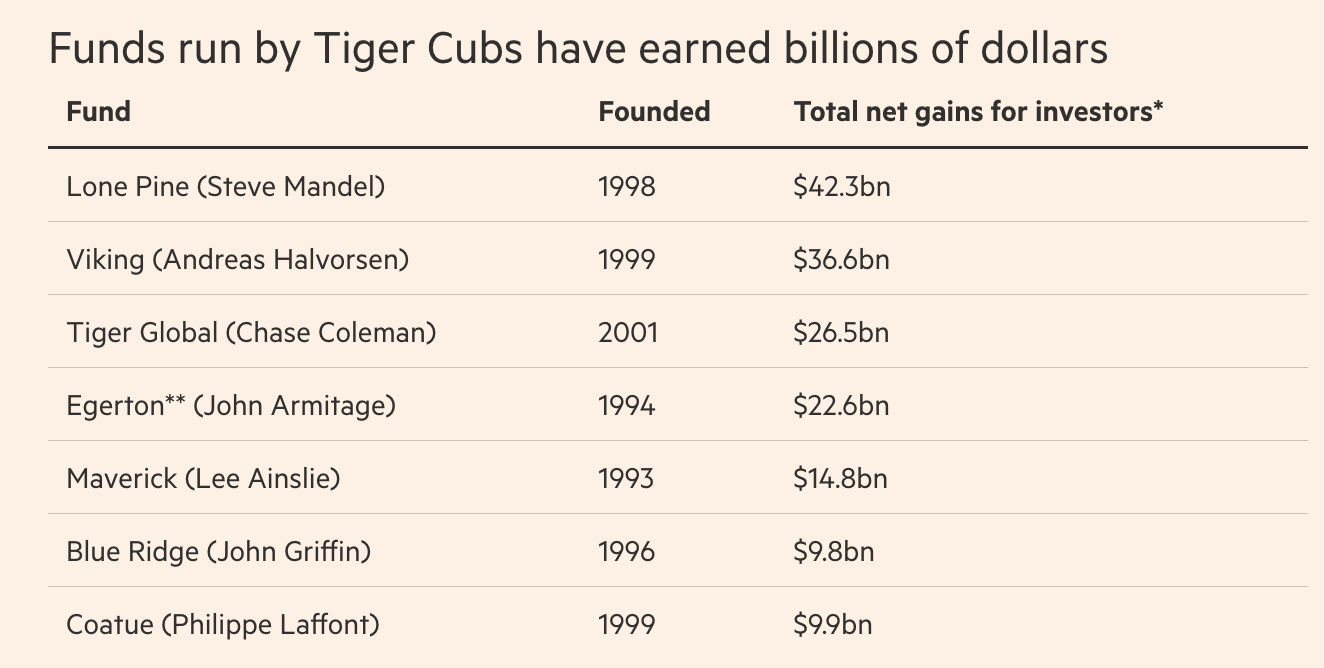
A similar approach has been adopted by "tiger cubs" such as Tiger Global's Chase Coleman, Lafonte and Maverick's Ansley, who invest in technology companies that may be considered expensive by traditional valuation metrics but have delivered huge gains. All three expanded into the private corporate world, pursuing broader opportunities.
Those who invested when Coleman founded Tiger Technology (now Tiger Global) in 2001 at age 25 may have seen their initial investment grow 43-fold. Coleman said Robertson's guidance gave the Cubs the confidence to take risks when they identified unique opportunities.
The same goes for David Goel's low-profile firm Matrix Capital, which has raised only about 7 billion through performance, according to people familiar with the company.
"Julian Robertson's ability to recruit young analysts, train them in equity investing and allow them to flourish as spin-offs is unique, given the success of many 'tiger cubs,'" said Pierre-Henri Flamand, senior investment advisor at Man GLG. "This will be his legacy."
The story of Tiger Management shows how Julian Robertson cultivated a generation of top hedge fund managers through rigorous recruitment, a unique corporate culture and a long-term investment perspective. These "tiger cubs" not only achieved great success in the financial field, but also continued Robertson's investment philosophy. Their influence spans global financial markets, creating tremendous value for investors. This will be Robertson's valuable legacy to the financial world.
TheQuantHackers is a cutting-edge community composed of a group of people from the world's top universities and quantitative finance practitioners, dedicated to exploring the infinite possibilities in the fields of artificial intelligence (AI) and quantification (Quant). Our team members come from world-renowned universities such as the University of Cambridge, Oxford University, Harvard University, ETH Zurich, Peking University, and the University of Science and Technology of China. Our external consultants come from first-class companies such as Microsoft, HSBC, Citadel, Man Group, Citi, Jump Trading, and top domestic private equity companies.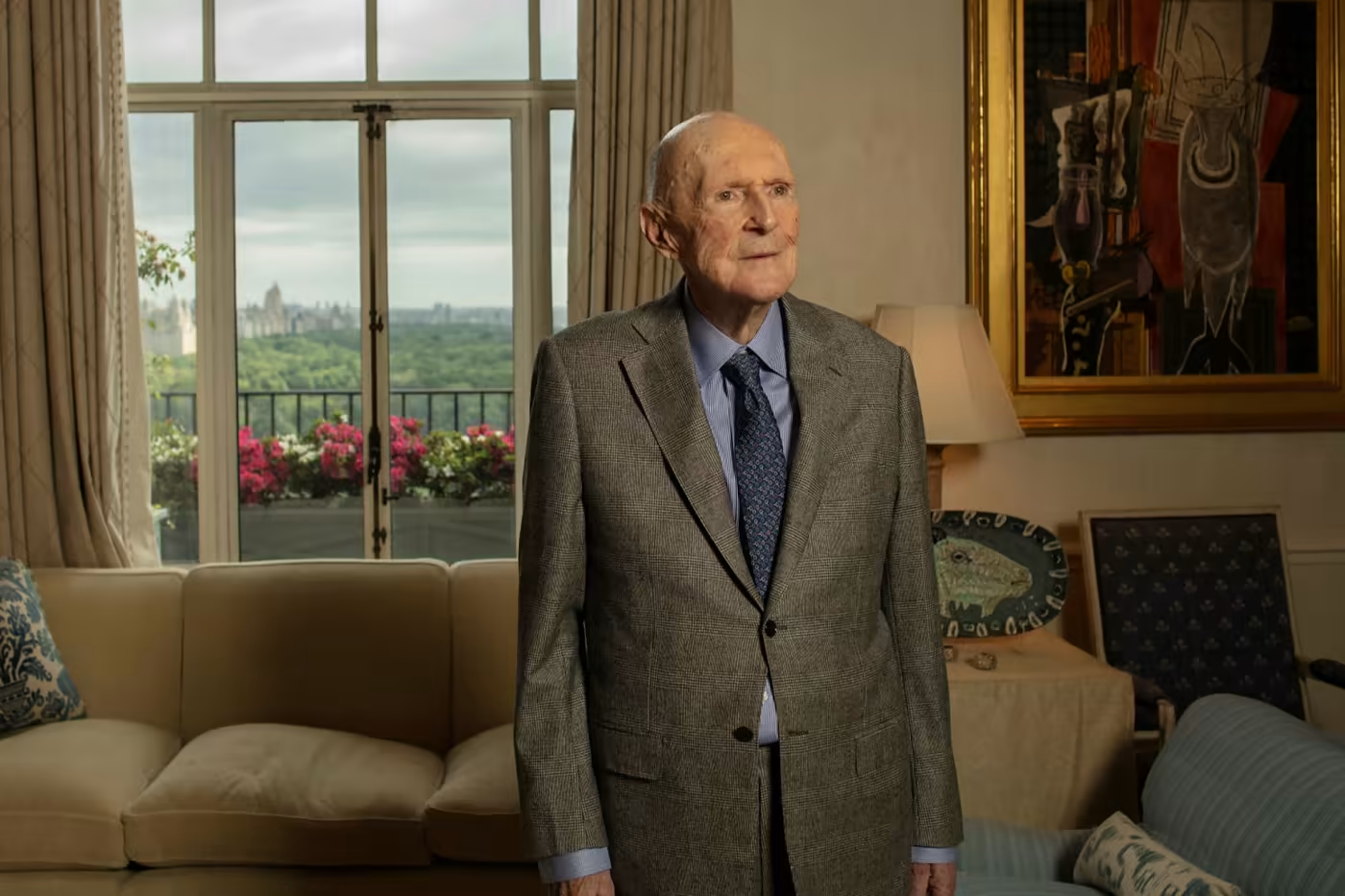
“一旦你拥有老虎的血统,这有助于说服任何人与您开展业务,”一家在Archegos崩溃中亏损的银行的主要经纪人说道。
黄的案例是一个特例。在这个已经为客户赚取了数十亿美元的经理人群体中,一些人现在是世界上最受推崇的投资者。
当Archegos资本管理公司的崩溃在多家银行造成超过100亿美元的损失时,创始人比尔·黄(Bill Hwang)的背景引人注目:他曾是老虎管理公司(Tiger Management)的成员。
在今年3月这家私人投资公司的倒闭之前,黄还是一个相对默默无闻的人物,更为人所知的是他在2012年因电信欺诈指控而认罪。然而,同业者对于他能够在此之后从顶级银行获得500亿美元的融资,以放大最终失败的赌注感到震惊。
但黄作为前老虎基金经理的身份,使他跻身对冲基金的精英行列。他在纽约的老虎管理公司工作,从1996年到2001年,成为了20世纪80年代对冲基金先驱朱利安·罗伯逊(Julian Robertson)的门徒。这次Archegos的惨败凸显了,即使在罗伯逊关闭老虎基金对外投资数十年后,他的所谓“老虎崽子们”仍然有足够的声望,为他们打开通往世界最负盛名的银行和投资者的大门。
罗伯逊在接受《金融时报》采访时表示,严格的招聘过程是关键:“我认为他们是有才华的人,我们以一种非常有计划和刻意的方式去寻找他们。他们真的被非常仔细地挑选出来。”
Coatue资本的创始人菲利普·拉丰特(Philippe Laffont)表示,老虎专注于招聘“全面发展的人而非专家”是“秘诀”,创造了一种由具有竞争力、好奇心和外向型的人组成的文化。
在这个过程中,一个关键人物是亚伦·斯特恩博士(Dr. Aaron Stern),他是一位精神分析学家,在公司担任过包括首席运营官在内的多个角色,长达30年。斯特恩博士于今年4月去世,享年96岁,他是自恋型人格障碍的顶级专家,1979年出版了有影响力的《我:自恋的美国人》(Me: The Narcissistic American)一书。
“亚伦是一个伟大的人,”博德曼说道。“说他对朱利安的成功负有责任可能有点过分……但他是那个挑选出应该在那里、应该坐在国王餐桌旁的人。”
罗伯逊在1990年代初利用斯特恩博士开发了一种系统的方法来复制老虎早期在招聘有才华的年轻分析师方面的成功,此前这一直依赖于他的直觉。对申请者的测试包括大约450个问题,持续超过三个小时。
“他非常重要,因为他确实完善了我们使用的这种招聘技术,”罗伯逊说道。
问题可能包括罗夏墨迹测试,最初于1921年开发,用于发现精神失衡。斯特恩还设计了考试,使申请者无法通过提供他们认为老虎想要的答案来“操纵”结果。
“一些问题是开放式的,”一位参加过测试的前投资组合经理说道。“类似于:与团队相处融洽更重要,还是挑战他们更重要?你更愿意在智力上是对的但亏钱,还是在智力上是错的但保住交易?”
目的是了解申请者的思维方式、承担风险的倾向以及团队合作的能力。这个过程反映了那个时代的特点;招聘的绝大多数是男性,在这个至今仍以男性为主的行业中,没有值得注意的女性成员。尽管如此,这种思考方式以其独特而突出。老虎不只是寻找最聪明的人,而是寻找那些高度竞争并在体育等领域表现出色的人。
“一个人一旦有了一定的智商,智商对他们的成功实际上并不像你想象的那样重要,”朱利安的儿子、现任老虎管理公司总裁的亚历克斯·罗伯逊(Alex Robertson)说道。
年轻的分析师与更有经验的同事一起工作,学习他们的技能。每个人都努力工作,有些人每天工作长达14小时,周六也工作。公司在其位于101公园大道总部的顶层建了一个健身房,朱利安每天都会去,以帮助员工减压。
“我们是年轻且超级竞争的分析师,与那些每天工作7小时、习惯于两杯马提尼午餐的人竞争,”Maverick资本的创始人李·安斯利(Lee Ainslie)说道。
公司还鼓励分析师非正式地分享和挑战想法,经常走进彼此的办公室讨论对某只股票的看法。朱利安自己的办公室位于顶层,没有门,以鼓励员工向他提出想法。
“早期,朱利安给了你专注于诚实思考的能力,”拉丰特说道。
“对于任何事情,他都会强迫你看到争论的两面。永远不会有狂热分子每个硬币都有两面。如果朱利安认为你已经对故事的另一面不屑一顾,那么你会被视为没有准备好,因为你被认为在方法上过于狭隘或短视。”
斯特恩博士还在解决分析师之间的争论和解释朱利安如何管理公司方面发挥了关键作用。“他是一个伟大的解决方案提供者和问题解决者,”亚历克斯·罗伯逊说道。“他确保每个人都作为一个团队团结在一起。”
老虎管理公司及其“老虎崽子”以其长期观点和对公司的深入研究而闻名,他们会与客户和竞争对手交谈以获得额外的洞察力。罗伯逊的目标是找到最好的20只股票买入,最差的20只股票做空。老虎通常使用约100%的杠杆,这意味着总的市场敞口可能高达230%。
虽然估值很重要,但这往往是次要的,诸如公司在行业中的地位和进入壁垒等因素更为关键。“投资论点从未围绕公司在下个季度会表现好坏而建立,”拉丰特说道。“它始终是一个长期关注点,三到五年的时间范围。”
类似的方法已被“老虎崽子”如Tiger Global的蔡斯·科尔曼(Chase Coleman)、拉丰特和Maverick的安斯利所采用,他们投资的科技公司在传统估值指标上可能被视为昂贵,但却带来了巨大的收益。三人都扩展到了私人公司领域,寻求更广泛的机会。
那些在科尔曼于2001年25岁时成立Tiger Technology(现为Tiger Global)时投资的人,初始投资可能已经增长了43倍。科尔曼表示,罗伯逊的指导使“老虎崽子”有信心在发现独特机会时承担风险。
大卫·戈尔(David Goel)的低调公司Matrix Capital也是如此,据熟悉该公司的人士称,它仅从投资者那里筹集了约10亿美元,通过业绩增长到大约70亿美元。
“朱利安·罗伯逊在招聘年轻分析师、培训他们进行股票投资并允许他们作为分拆公司蓬勃发展方面的能力是独一无二的,鉴于许多‘老虎崽子’取得的成功,”Man GLG的高级投资顾问皮埃尔-亨利·弗拉芒(Pierre-Henri Flamand)说道。“这将是他的遗产。”
老虎管理公司的故事展示了朱利安·罗伯逊如何通过严格的招聘、独特的企业文化和长期投资视角,培养了一代顶尖的对冲基金经理。这些“老虎崽子”们不仅在金融领域取得了巨大的成功,也延续了罗伯逊的投资哲学。他们的影响力遍及全球金融市场,为投资者创造了巨大的价值。这将是罗伯逊留给金融界的宝贵遗产。
TheQuantHackers是由一群来自世界顶尖高校和量化金融从业人员组成的前沿社区,致力于探索人工智能(AI)与量化(Quant)领域的无限可能。我们的团队成员来自剑桥大学、牛津大学、哈佛大学、苏黎世联邦理工学院、北京大学、中科大等世界知名高校,外部顾问来自Microsoft、HSBC、Citadel、Man Group、Citi、Jump Trading、国内顶尖私募等一流企业。
Upgrade to unlock all institutional-grade algorithms, derivative pricing engines, factor backtesting frameworks, and live QuantLab execution.
Explore Membership Access Pre-order · £490
Quantitative analytics platform
Waitlist closed — signal locked. Pre-order TQH TERMINAL now at £490 with launch-day delivery.